

The Hidden Danger of Pencils Inside a Piano Action
Pianos are precise, delicate instruments. Every key you press sets off a carefully balanced chain of wooden, felt, and metal parts known as the action. When everything works as designed, the result is control, tone, and expression. But when a foreign object—especially something as common as a pencil—falls into the piano action, serious problems can occur.
What seems like a harmless accident can quickly turn into costly damage and safety risks for the instrument.
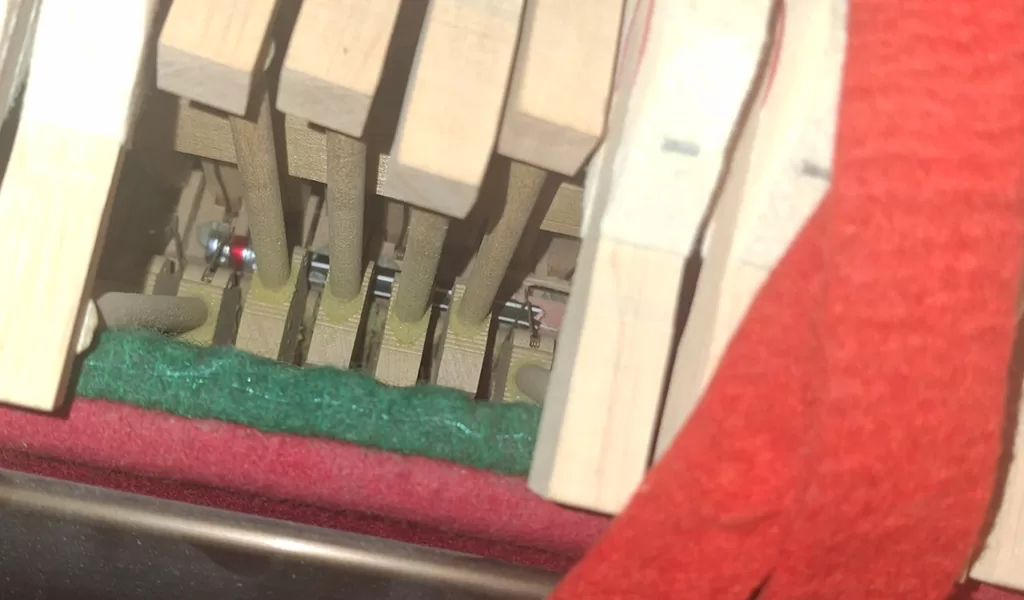
How Does A Pencil End Up Inside Pianos?
Pencils often fall into pianos accidentally, especially in homes, schools, and practice studios. Common situations include:
- Placing pencils on the music desk and also on the fallboard
- Young students playing near the keyboard
- Writing notes on sheet music while the fallboard is open
- Pencils rolling through gaps between keys
In upright pianos, objects can drop directly into the action. In grand pianos, they may fall beneath the keys or into the keybed, where they can still interfere with moving parts.
Why a Pencil Is More Dangerous Than It Looks
A piano action is designed to move freely with extremely tight tolerances. A single pencil can:
- Jamming moving parts, causing keys to stick or stop working
- Break fragile wooden components, such as action parts or hammer shanks
- Damage felt and leather, leading to uneven touch or unwanted noise
- Misalign the action, affecting regulation, touch, and playability
If force is applied—such as continuing to play while a pencil is lodged inside—the damage can escalate quickly.
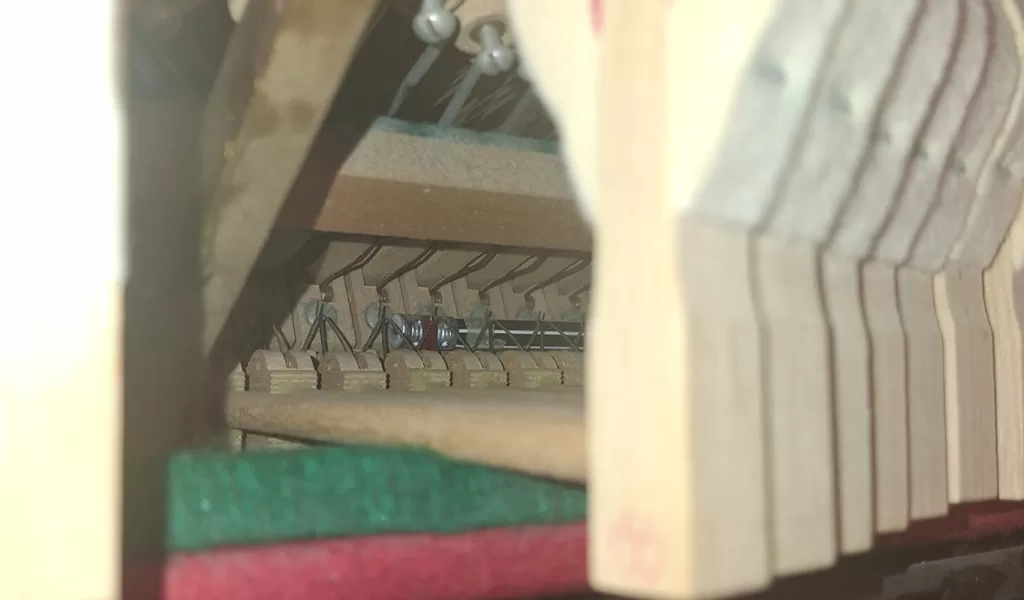
Warning Signs of a Pencil Inside the Action
You may not always see the pencil, but the piano will often tell you something is wrong. Watch for:
- Keys that do not return properly
- Sudden loss of sound on one or more notes
- Clicking, scraping, or rattling noises
- Keys that feel unusually heavy or blocked
Ignoring these signs and continuing to play can also increase the risk of permanent damage.
Why You Should Not Try to Fix It Yourself
It may be tempting to shake the piano, turn it upside down, or remove parts to retrieve the pencil. This often causes more harm than good.
Piano actions are complex and precisely adjusted. Untrained handling can result in:
- Broken action parts
- Lost regulation
- Additional objects falling deeper into the piano
A professional piano technician has the tools and experience to safely remove foreign objects without causing further damage.
Prevention: Simple Habits That Protect Your Piano
Preventing pencils from entering the piano is easy with a few good habits:
- Never place pencils or pens on the piano
- Use a separate table or music stand for writing
- Close the fallboard when the piano is not in use
- Teach students that the piano is not a storage surface
- Regularly check around and between the keys
These small steps can save hundreds of dollars in repairs.
Protecting Your Instrument
A piano is an investment in music, craftsmanship, and time. Something as small as a pencil can interrupt practice, damage delicate mechanisms, and certainly shorten the life of the instrument.
If you suspect a foreign object has fallen into your piano, stop playing immediately and contact a qualified piano technician. Acting quickly can prevent minor accidents from becoming major repairs.
Sometimes, the greatest threats to a piano are not dramatic—but ordinary objects in the wrong place.