

Reconditioning a piano action hammerhead—sometimes called reshaping or refurbishing—can bring new life to an instrument without the cost of a full replacement. Over time, hammerheads develop deep grooves from striking the strings thousands of times. Felt becomes compacted, tone grows harsh or uneven, and the piano’s dynamic range diminishes. Hammerhead reconditioning addresses these issues by carefully reshaping the felt, restoring its proper contour, and adjusting its density.
Improved tone is one major benefit. By removing grooves and restoring the original hammer profile, the hammer can strike the strings cleanly again, producing a fuller, warmer, and more consistent sound across the keyboard. This also enhances control; pianists can achieve smoother gradations in volume because the hammer responds more predictably.
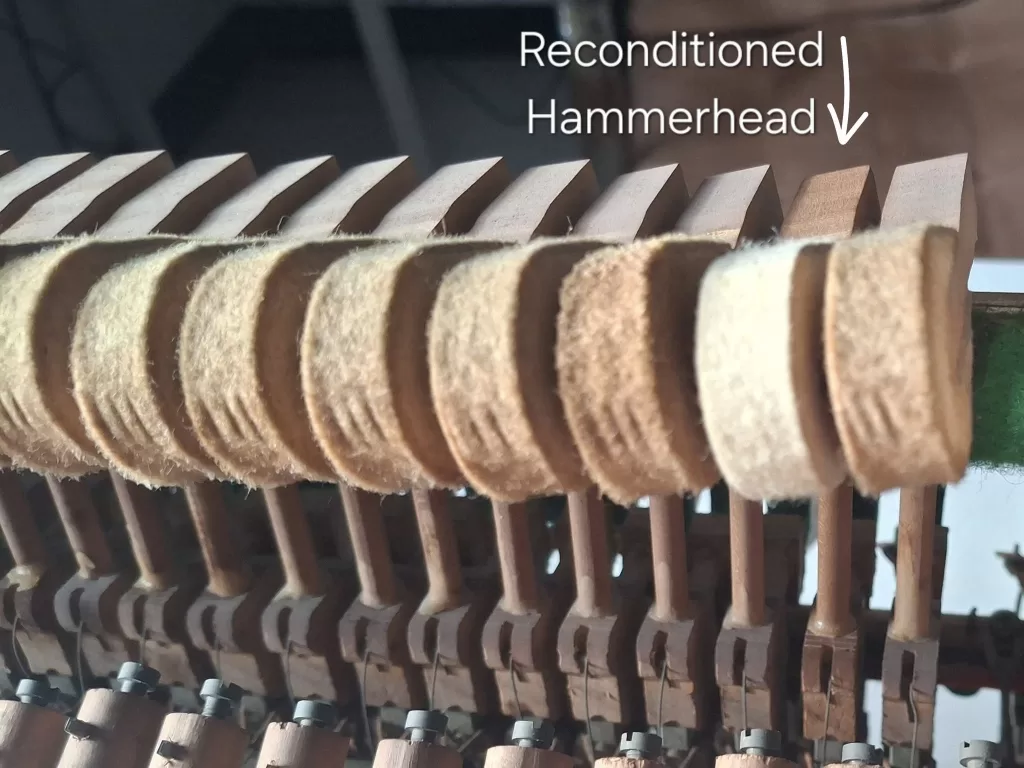
Reconditioning also extends the lifespan of the piano action hammer. Instead of installing new hammers—which requires extensive regulation to maintain alignment and touch—reshaping preserves much of the existing setup. This can make it a cost-effective option for maintaining performance quality, especially for older pianos with otherwise stable actions.
Ultimately, the process contributes to the overall health of the piano action. Even, well-shaped hammers help maintain proper touch, reduce unwanted mechanical noise, and support better regulation. For many instruments, reconditioning the hammerheads is an efficient way to restore musicality and prolong the life of the piano.
After hammerhead reconditioning, do you need to regulate the piano action?
Yes — in most cases, at least partial action regulation should be done after reshaping the hammerheads. If the reshaping is extremely light (just cleaning the surface of the hammerhead, removing almost no material), the action regulation might only need minimal touch-ups. However, anything more than “light sanding” generally affects the geometry of the hammerhead. Therefore, proper and full action regulation should be done.
You can click on the link below to get an idea about what piano action reconditioning is. https://www.facebook.com/primepianobkk/videos/514657338350335
If you want to know more about piano maintenance, please do not hesitate to contact us for your inquiries.