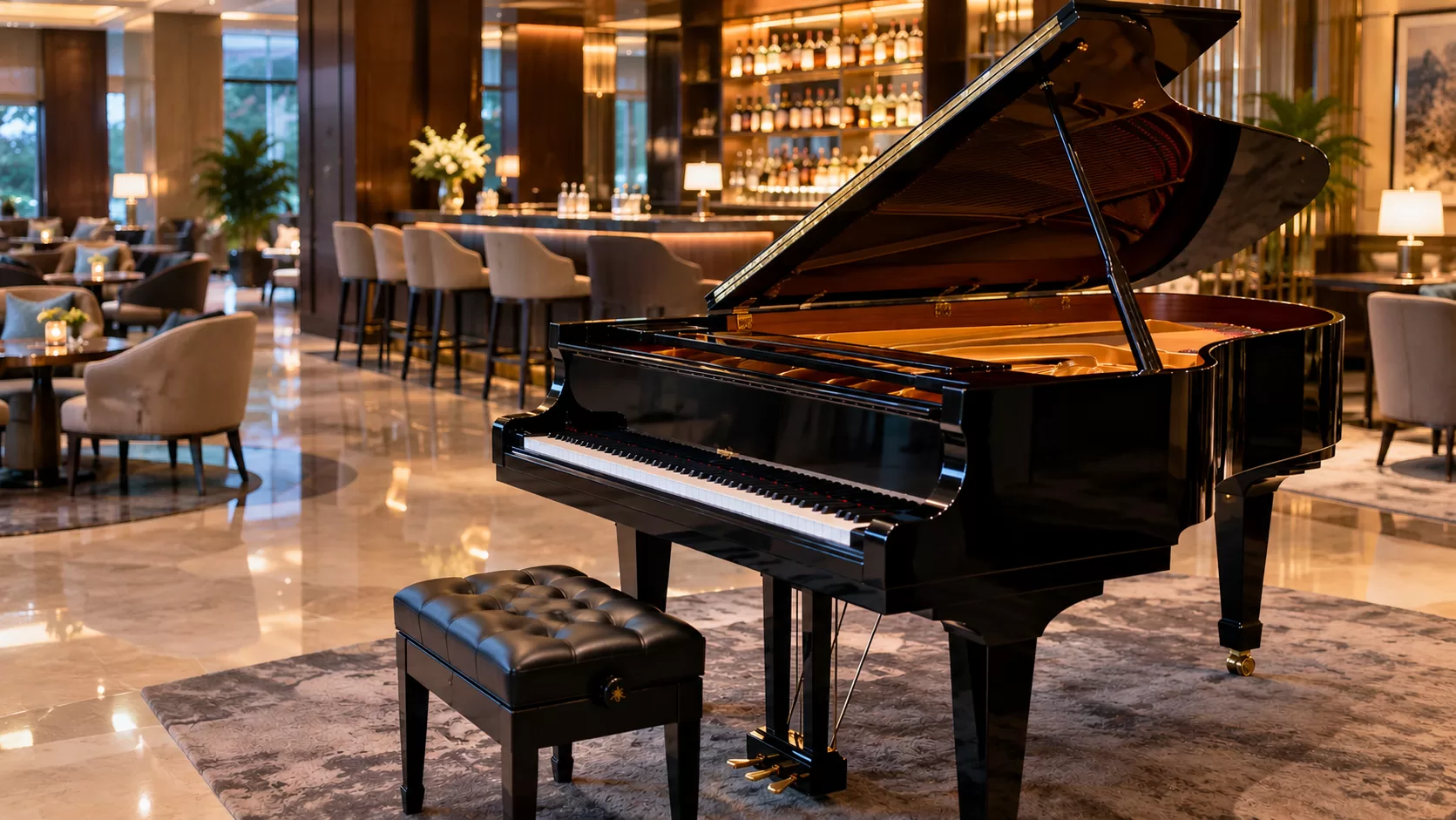
Hotel piano tuning and maintenance are essential. Venues that feature pianos in their lobbies, restaurants, bars, ballrooms, or entertainment areas create an atmosphere of elegance, sophistication, and luxury. Whether a piano is used for live performances, guest entertainment, special events, or simply as a decorative centerpiece, it can significantly enhance the guest experience. However, maintaining a piano in a hotel environment requires more attention than many hotel managers realize. Regular piano tuning and maintenance by a qualified piano technician are essential to preserve the instrument’s sound quality, playing condition, appearance, and long-term value.
1. Hotel Pianos Experience Heavy Workloads
Unlike pianos in private homes, hotel pianos may be played by professional musicians, hotel entertainers, event performers, and even guests. A piano in a hotel lobby or restaurant may be used for several hours a day, while instruments in ballrooms and function rooms may experience intensive use during weddings, conferences, and special events.
This frequent playing places considerable demands on the piano’s internal components. Every keystroke activates a complex mechanism involving hammers, strings, dampers, and other moving parts. Over time, these components experience friction, compression, and gradual wear.
The heavier the workload, the greater the need for regular inspection, tuning, and mechanical adjustment. A piano technician can assess how frequently the instrument is being used and recommend a suitable maintenance schedule based on its workload, condition, and performance requirements.
For hotels that rely on live piano music to create a welcoming atmosphere, neglecting maintenance can result in poor sound quality, uneven keys, and an instrument that no longer performs reliably.
2. Wear and Tear Can Affect Piano Performance
Pianos are precision instruments containing thousands of individual parts that must work together accurately. With frequent use, piano hammers gradually wear and compress, strings can lose their stability, and the action mechanism may become uneven or less responsive.
These changes can affect the piano’s tone, touch, and overall playability. Some notes may sound louder or duller than others, while certain keys may feel heavier, lighter, or less responsive. For professional pianists, these inconsistencies can make performing difficult. For hotel guests, they can diminish the quality of the musical experience.
Regular hotel piano tuning and maintenance help identify these problems before they become more serious. A qualified piano technician can inspect the instrument, regulate the action, assess hammer wear, check the pedals, and identify mechanical issues that require attention.
Addressing wear and tear early can also help prevent more expensive repairs. For hotels, preventive maintenance is a practical investment that protects the piano while helping maintain consistent performance.
3. Hotel Environments Can Affect Piano Tuning and Condition
The environment in which a piano is kept has a significant influence on its condition. Hotels frequently use air conditioning, heating, ventilation systems, and changing lighting arrangements, all of which can contribute to fluctuations in temperature and humidity.
Piano soundboards and other wooden components respond to changes in humidity by expanding or contracting. These movements can affect string tension and cause the piano to go out of tune. Significant environmental fluctuations may also contribute to long-term structural problems.
In busy hotel environments, pianos may also be exposed to dust, accidental spills, vibrations, and frequent movement during room rearrangements or event setups.
A qualified piano technician can evaluate the instrument’s condition, identify environmental concerns, and recommend practical measures to protect it. These may include selecting a more suitable location, improving humidity management, and arranging regular inspections.
Consistent environmental care, combined with professional piano tuning, helps preserve the instrument’s stability and extends its useful life.
4. Regular Hotel Piano Tuning Protects Sound Quality
A piano that is frequently played in a hotel should sound pleasant, balanced, and harmonious. However, repeated playing and environmental changes can cause strings to drift from their correct pitches.
When a piano is out of tune, the problem can be particularly noticeable in quiet hotel lounges, upscale restaurants, and other spaces where guests expect a refined atmosphere. Even small tuning inconsistencies can affect the overall musical experience.
Professional piano tuning restores the relationships between the pitches of the strings, helping the instrument produce a more harmonious sound. The technician can also identify potential tuning stability issues and determine whether additional maintenance is necessary.
Hotels should not wait until guests or musicians complain about the piano’s sound. Instead, they should establish a regular tuning schedule based on usage, environmental conditions, and the instrument’s current stability.
For heavily used hotel pianos, tuning may be necessary several times a year or more frequently when performance demands and conditions warrant it. A qualified piano technician can recommend an appropriate schedule for each instrument.
5. A Qualified Piano Technician Provides More Than Tuning
Piano tuning is only one part of comprehensive piano care. An instrument may be correctly tuned but still have mechanical problems that affect its performance.
A qualified piano technician can provide a range of essential services, including:
- Piano tuning: Correcting pitch and improving tonal consistency.
- Action regulation: Adjusting the piano mechanism to improve key response, repetition, and playing consistency.
- Hammer inspection and voicing: Assessing hammer condition and addressing tonal imbalances where appropriate.
- Mechanical repairs: Identifying and repairing worn, damaged, loose, or malfunctioning components.
- Pedal adjustment: Ensuring that the pedals operate correctly and reliably.
- General condition assessment: Evaluating the piano’s overall health and recommending appropriate maintenance or restoration.
- Preventive maintenance: Identifying developing problems before they lead to costly repairs or performance interruptions.
A technician with experience servicing hotel pianos can also consider the instrument’s workload, the expectations of professional performers, and the hotel’s operational requirements when planning maintenance.
This comprehensive approach helps ensure that the piano remains not only in tune but also mechanically reliable and suitable for its intended use.
6. Regular Hotel Piano Tuning and Maintenance Helps Reduce Long-Term Costs
Replacing a hotel piano can be a significant expense, particularly when the instrument is a high-quality grand piano or an important feature of the hotel’s interior design.
Neglecting maintenance can allow minor issues to develop into more serious problems. Worn action components, neglected mechanical faults, unstable tuning, and environmental damage may eventually require extensive repairs or restoration.
Routine inspections and preventive maintenance help hotels identify issues early and make informed decisions about repairs, servicing, and future investment.
Although regular piano tuning and maintenance involve ongoing costs, they can help protect the instrument’s value and reduce the risk of unexpected expenses. A well-maintained piano may also remain in service longer, depending on its age, construction, workload, and overall care.
For hotel managers, incorporating piano maintenance into the property’s regular maintenance budget is a sensible way to protect an important hospitality asset.
7. A Well-Maintained Piano Enhances the Guest Experience
A piano can contribute significantly to a hotel’s identity and atmosphere. Soft piano music in the lobby, live performances in the lounge, and musical entertainment during special events can create memorable experiences for guests.
However, a neglected piano can have the opposite effect. Poor tuning, uneven keys, unwanted mechanical noises, and an inconsistent tone may undermine the elegant atmosphere the hotel aims to create.
Maintaining the piano in good playing condition demonstrates attention to detail and reinforces the hotel’s commitment to quality. It also gives musicians greater confidence when performing and helps ensure that the instrument meets the expectations of guests and event organizers.
For hotels that advertise live piano entertainment or provide pianos for professional performers, regular servicing is especially important. The instrument should be ready to perform whenever it is needed.
Conclusion: Professional Piano Care Is Essential for Hotels
Hotels with pianos should regard regular piano tuning and maintenance as an essential part of property and asset management, rather than an occasional expense. Heavy workloads, frequent playing, environmental fluctuations, and natural wear and tear all affect a piano’s condition over time.
Working with a qualified piano technician helps hotels maintain accurate tuning, reliable mechanical performance, consistent sound quality, and the long-term condition of their instruments.
Whether a piano is used daily in a hotel lobby, regularly played in a restaurant, or reserved for weddings and special events, its maintenance requirements should reflect its actual use and condition.
Regular piano tuning, professional inspections, and preventive maintenance protect the instrument, support musicians, and help hotels deliver the high-quality musical experience their guests expect. Investing in professional piano care today can help preserve both the piano’s performance and its value for years to come.